Key Analytical Insights
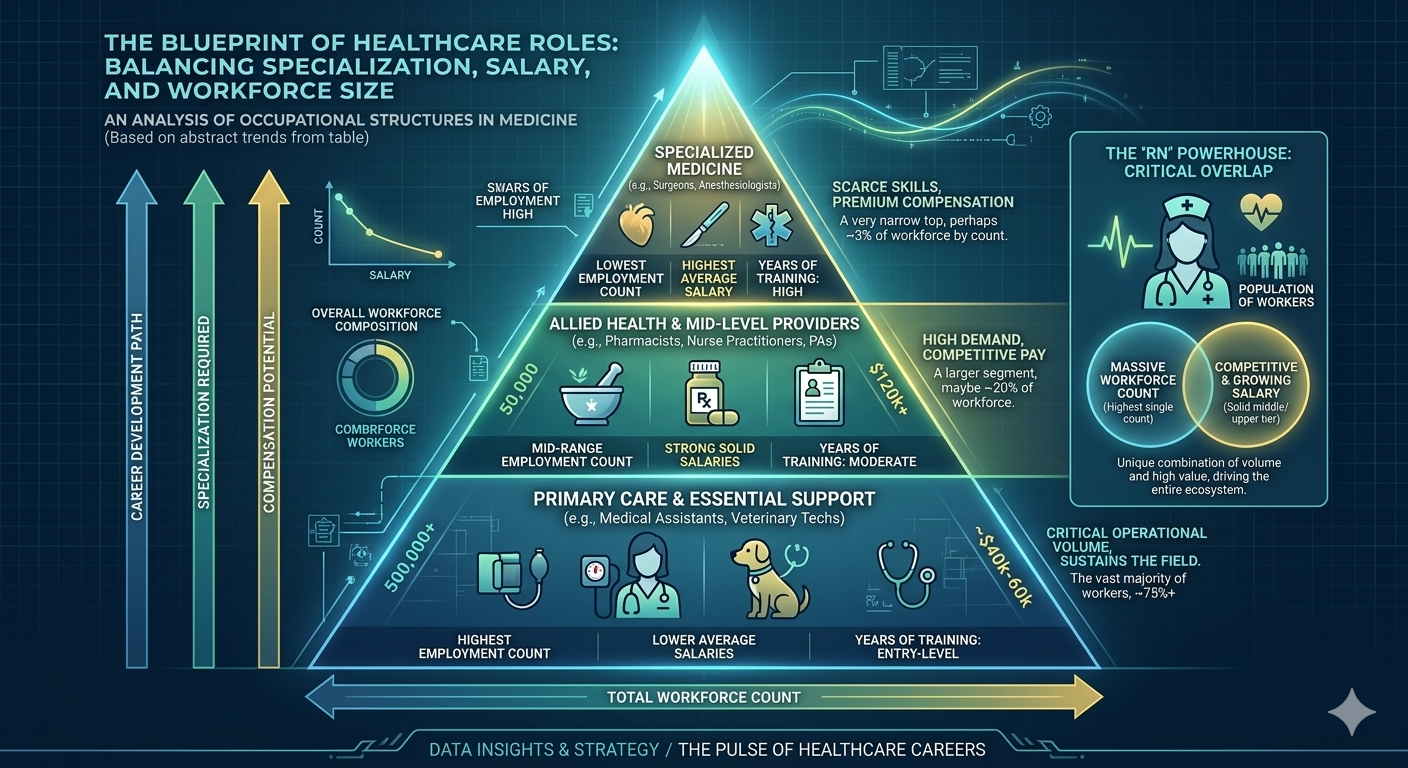
1. The “Pyramid” Structure of Healthcare The data strongly visualizes the structural reality of the medical field: it relies on a massive foundation of support and general care staff to operate, while highly specialized roles make up a very small percentage of the workforce.
-
High-Volume Roles (Warm colors in the ‘Count’ column): Occupations like Registered Nurses, Medical Assistants, and general Healthcare Support Workers show the highest employment counts (highlighted in orange/yellow). Registered Nurses, in particular, appear to have a massive workforce count stretching into the millions.
-
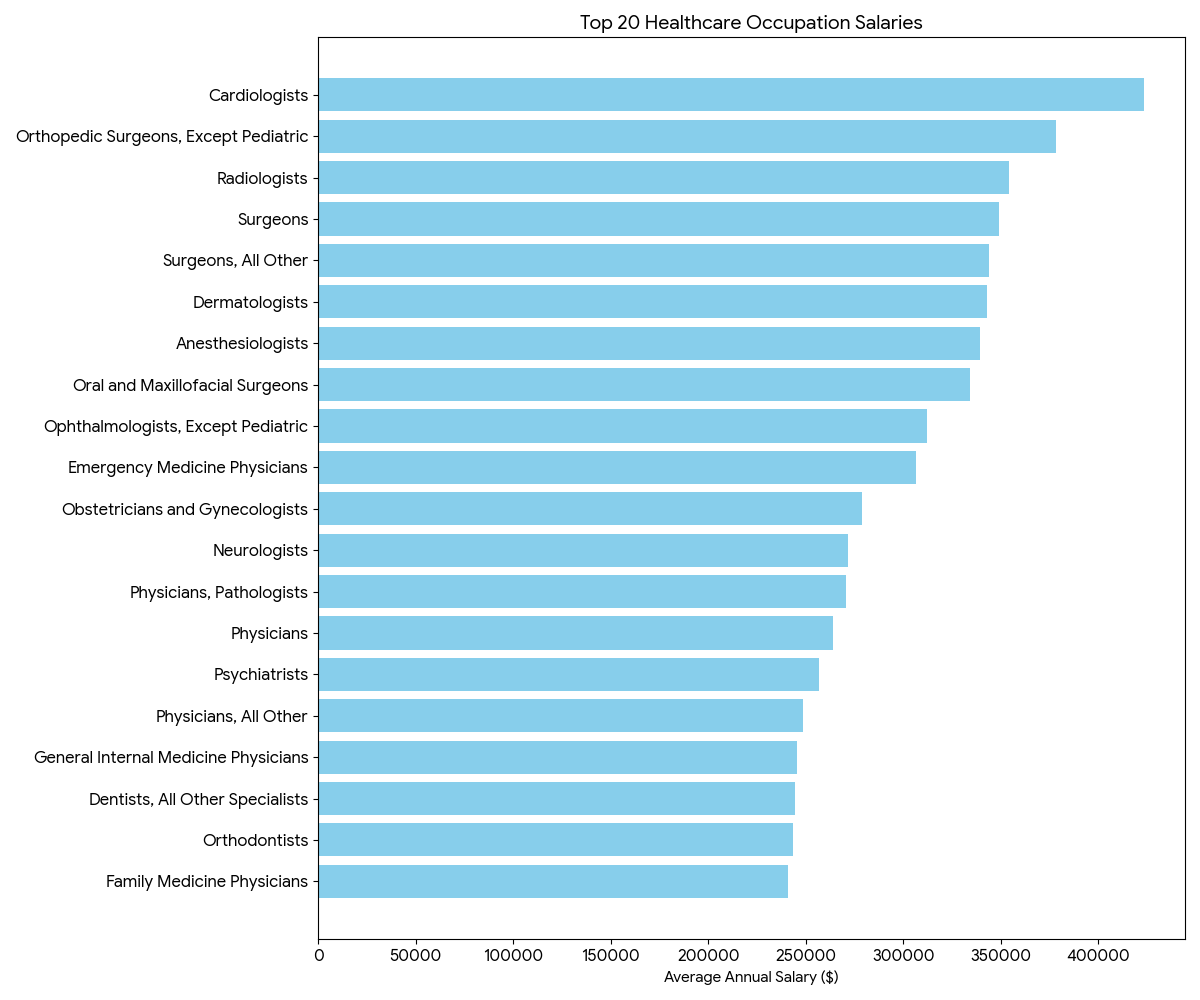
Low-Volume Roles (Dark green in the ‘Count’ column): Highly specialized physicians (e.g., Cardiologists, Dermatologists, Neurologists, Surgeons) have very low employment counts relative to the rest of the field.
2. The Compensation-Specialization Correlation There is a clear, inverse relationship between the number of people in a role and the salary they command, which aligns with the years of education and specialization required.
-
Top Earners: The highest salaries (bright yellow in the ‘Salary’ column) belong almost exclusively to specialized medical doctors and surgeons (e.g., Anesthesiologists, Psychiatrists, Surgeons). Their counts remain very low, but their salaries appear to exceed $200,000–$300,000.
-
Moderate Earners: Allied health professionals and mid-level practitioners like Pharmacists, Physical Therapists, Nurse Practitioners, and Physician Assistants sit in the middle. They show moderate to high salaries (often in the low six figures) with moderate employment counts.
-
Lower Earners: Roles with the highest counts often fall on the lower end of the salary spectrum. Medical Assistants, Veterinary Technicians, and Pharmacy Technicians show darker green in the salary column, reflecting entry-level or lower-tier compensation (likely in the $30,000–$40,000 range), despite their critical operational volume.
3. The Outlier: Registered Nurses Registered Nurses (RNs) represent a unique intersection in this dataset. They have an exceptionally high employment count (the highest single specific occupation visible), yet they maintain a solid middle-to-upper-tier salary (light green/yellow in the salary column). This highlights the intense, sustained demand for skilled nursing care in the economy.